
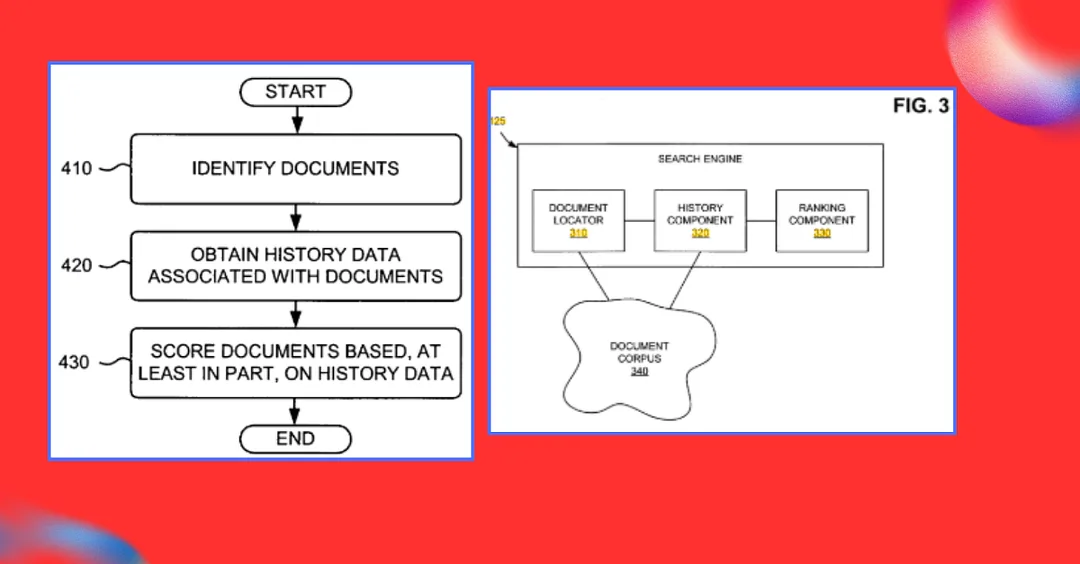
Google patent US 2019/0155948 A1 describes a system for re-ranking broad category searches using signals connected to navigational queries and user selections.
In plain English, Google may not always ask which page is the most relevant for a broad query. It may also ask which websites people already recognise as destinations in that category.
That distinction helps explain a frustrating pattern in SEO. A smaller brand can publish the better page, build stronger links and optimise every detail, yet an established competitor still ranks above it with a fairly ordinary homepage.
The patent does not prove that Google uses this exact system today. Patents describe methods Google may use, modify or never deploy. Still, the mechanism offers a useful way to understand why brand demand and search performance are often more closely connected than SEOs assume.
What Is a Categorical Query?
A categorical query is a broad search for products, services or information within a category. The user is exploring the market rather than trying to reach one specific website.
Examples include:
[project management software]
[email marketing tools]
[online videos]
These searches create a problem for a relevance-based ranking system. The most recognised destination in a category does not always use the category phrase heavily on its homepage.
YouTube is an easy example. Its homepage does not need to repeat “online videos” dozens of times for people to associate the brand with that category. Users already know where they want to go.
A system based only on keyword relevance could miss that relationship. The category quality mechanism described in the patent attempts to account for it by looking at user behaviour around the resources already appearing in the results.
That’s where navigational queries enter the picture.
How Does the Category Quality System Decide When to Re-Rank Results?
The category quality system re-ranks a result set when enough of the initial results meet a defined quality condition.
The patent describes 4 signals that may be considered for each resource in the top N results. In the article’s working example, N represents an initial set of roughly 10 to 30 results:
Navigational scores from other queries: Do people use searches such as [taskflow] to reach that resource directly?
Topicality: How closely is the resource associated with the category behind the broad query?
Aggregate selections: How often do users select that resource across the searches where it appears?
Navigational intent of the original query: Is the broad query itself actually navigational? The system may suppress re-ranking when that is the case.
In the patent’s example, re-ranking can occur when roughly 60% to 70% of the resources in the initial set satisfy the quality condition. The system then calculates a quality score for each qualifying resource and uses that score to change the order.
Here’s the thing: relevance still matters because a site must first appear in the candidate set. But once the category quality process activates, relevance may no longer be the only signal deciding the final order.
How Does Google Calculate the Quality Score?
The patent outlines 2 methods for calculating a resource’s quality score. Both methods connect the score to navigational behaviour rather than relying only on how closely the page matches the broad category query.
Method 1: Process 400 Uses One Navigational Query
Process 400 identifies the navigational query most strongly associated with a resource. It then evaluates how relevant the resource’s homepage is to that navigational query.
For a fictional brand called TaskFlow, the relevant query would probably be [taskflow]. The system is effectively checking whether the destination users seek for that branded query is clearly associated with the resource being scored.
The relationship can be represented as:
Quality Score = Relevance(Homepage, Best Navigational Query)That’s not the same as measuring how well TaskFlow’s category landing page is optimised for [project management software]. The scoring input comes from the connection between the resource and its strongest navigational query.
Method 2: Process 500 Aggregates Navigational Queries
Process 500 looks across the top M navigational queries associated with a resource. It can aggregate selection counts from queries such as:
[taskflow]
[taskflow login]
[taskflow pricing]
The received categorical query may also be included in that calculation. A brand with several well-established navigational queries therefore has more behavioural data supporting its quality score.
A useful simplified model is:
Quality Score ∝ Navigational Demand × Resource RelevanceThe patent does not give SEOs a public calculator for reproducing the score. The figures below are illustrative, but they show the competitive gap the mechanism could create.
| Site | Illustrative navigational volume | Homepage relevance | Illustrative score | Final position |
|---|---|---|---|---|
| Asana | 2,400,000 | 0.96 | 2,304,000 | 1 |
| TaskFlow | 85,000 | 0.81 | 68,850 | 4 |
| BuildBoard | 4,200 | 0.74 | 3,108 | 9 |
In this example, BuildBoard has the strongest on-page optimisation for [project management software], but it still finishes ninth. That’s the part many standard SEO audits would miss.
Why Do Navigational Queries Matter So Much?
Navigational queries matter because they give Google a proxy for whether users already recognise a website as a destination.
Someone searching [asana] is not exploring the entire project management category. They already know which resource they want. Repeated behaviour of that kind can indicate that a brand has earned a clear place in the market.
The relationship works in 2 stages:
The categorical query activates the system. Google reviews the initial results for a broad search such as [project management software] and checks whether enough resources meet the quality condition.
Navigational signals influence the new order. Once re-ranking starts, each resource is evaluated using the navigational behaviour associated with that resource.
That creates an uncomfortable reality for smaller brands. Improving a landing page may raise its relevance, but the improvement does not automatically close a large gap in navigational demand.
To be clear, the patent does not establish branded search volume as a confirmed direct ranking factor in Google’s live system. It describes a method in which navigational scores and selections contribute to resource quality. That is a narrower and more defensible conclusion.
What Advantages Do Established Brands Gain?
Established brands may gain 6 compounding advantages when category quality re-ranking applies.
1. Their Presence Can Help Trigger the Re-Ranking
Well-known brands such as Asana, Monday.com and ClickUp are more likely to satisfy a quality condition based on navigational behaviour. When enough recognised resources appear in the initial set, the re-ranking process can activate.
At that point, a smaller brand is no longer competing only on page relevance. It is being compared against years of accumulated user behaviour.
2. Their Quality Signals Are More Stable
A brand with 2.4 million monthly navigational searches has a much larger behavioural base than a brand with 4,200. In this illustrative model, the larger brand could lose 200,000 branded searches and still retain a wide lead.
That scale can make the larger brand’s position more resilient. The smaller brand has less room for changes in demand, user preference or selection behaviour.
3. Quality May Be Calculated at the Domain Level
The patent allows quality to be calculated for a domain, not just a single URL. That matters because a strong resource-level or domain-level score could influence how subpages are evaluated.
For example, Asana’s navigational signals are associated with the broader resource, while pages for features, pricing and templates sit beneath the same domain. A smaller competitor does not begin with the same reservoir of recognition.
4. Their Advantage Is Harder to Copy
Competitors can copy a title format, publish a similar guide or acquire links from the same publications. They cannot instantly copy years of people searching for a brand by name.
That makes navigational demand a slower signal to build. It also makes the signal harder to manipulate through one isolated SEO campaign.
5. They Suppress Smaller Brands Without Targeting Them
An established brand does not need to create a page attacking every new competitor. Its existing presence in the result set may be enough to widen the quality gap.
Publishing more content does not directly solve that problem. The smaller brand has to become a destination people recognise and seek out.
6. Multiple Branded Queries Can Compound the Lead
Process 500 can aggregate selections across several navigational queries. For Asana, those queries could include [asana], [asana login], [asana pricing] and [asana templates].
A newer brand may have only 1 or 2 weak navigational query patterns. When the system adds those selections together, the difference becomes even larger.
That’s why category leadership tends to reinforce itself.
Does Navigational Demand Carry Into Subtopics?
Navigational demand may influence subtopic rankings through 3 channels. The strength of that influence depends on whether the brand is recognised for the broad category, the subtopic or both.
Channel 1: Domain Quality Supports Subtopic Pages
A brand with strong domain-level quality may carry part of that advantage into its subpages. Asana’s page about Gantt chart software, for example, belongs to a domain already associated with project management.
That relationship does not remove the need for a relevant page. It gives the page a stronger starting position than an unknown resource covering the same topic.
Channel 2: Subtopic Queries Can Trigger Their Own Re-Ranking
[Gantt chart software] is narrower than [project management software], but it is still a categorical query. The same type of quality evaluation could therefore apply to the subcategory.
Broad brand recognition may help here, particularly when the domain is already topically connected to the narrower query.
Channel 3: Specialists Can Build Stronger Subtopic Signals
A specialist can still beat a category giant when its navigational demand is concentrated around the exact subtopic.
TeamGantt is a useful illustration. Suppose the brand attracts 280,000 monthly navigational searches concentrated around Gantt chart software. A user with that specific need may associate TeamGantt more closely with the subtopic than a general project management platform. Stronger topicality can make the specialist more competitive despite lower overall brand demand.
That creates 3 practical competitive zones:
| Zone | Query type | Example | Likely advantage |
|---|---|---|---|
| 1 | Category level | [project management software] | High-demand generalist brands |
| 2 | Subtopic category | [gantt chart software] | Strong domains and recognised specialists |
| 3 | Specific long tail | [gantt chart software for construction teams] | Highly relevant specialist pages |
For a new entrant, Zone 3 is usually the most realistic place to compete. The brand can build relevance around a specific use case before trying to challenge category leaders on broader terms.
What Happens When a Site Has Strong SEO but Weak Brand Demand?
A site with strong on-page SEO but weak navigational demand can still underperform on broad category searches. A standard audit may struggle to explain why because the technical and content signals look healthy.
Consider a fictional email platform called SendLoop with 5,030 monthly navigational searches. Its [email marketing software] page is well optimised, the site is fast and the link profile is clean. Yet Mailchimp, modelled here with 4.2 million monthly navigational searches, continues to rank above it whenever a category quality process gives more weight to established navigational behaviour.
An SEO team looking only at the page may recommend 3 familiar fixes:
Refresh the content
Build more backlinks
Run another technical audit
Those actions could improve relevance and authority. But they do not directly create more people searching [sendloop], recognising the brand in a result set or selecting it when it appears.
Here’s the hard part: weak navigational demand is not fixed inside the page. In the illustrative model, growing SendLoop from 5,030 monthly branded searches towards 50,000 would do more to narrow the behavioural gap than another routine content refresh. The homepage would still need to remain clearly relevant to the navigational query.
That doesn’t make SEO irrelevant. It means SEO has to work alongside product marketing, digital PR and audience development when the target is a broad commercial category.
What Should SEOs Do Differently?
SEOs competing for categorical queries should adjust 5 parts of their strategy.
1. Track Branded Search Demand as a Competitive Signal
Measure queries containing the brand name and common variants in Google Search Console. Track the trend over time instead of treating branded clicks as traffic the company would have received anyway.
A sustained rise shows that more people are actively looking for the brand. A decline can signal weakening awareness or preference, even when non-branded rankings have not moved yet.
2. Make the Homepage Clear About Brand and Category
The homepage should make 2 relationships obvious:
Who the brand is
Which category the brand belongs to
A vague H1 such as “Work Better Together” communicates less than “TaskFlow: Project Management Software for Growing Teams.” The second version connects the navigational entity to the category without turning the homepage into a keyword block.
3. Build a Focused Topical Identity
A brand associated with project management, CRM and time tracking at the same time may struggle to establish a clear primary category. A focused topical identity gives users and search systems a simpler association to remember.
Start with the category where the product has the strongest right to win. Expansion becomes easier once that relationship is established.
4. Review Selection Behaviour Across Search Results
Search Console click-through rate is not a public replica of the patent’s aggregate selection signal. Still, it gives SEOs a practical way to find pages that earn impressions without attracting clicks.
Review pages with at least 500 impressions and a click-through rate below 1% as an internal prioritisation rule, not as a universal Google threshold. Rewrite titles and descriptions where the result does not clearly communicate why the page deserves the click.
5. Treat Brand Building as Part of Search Strategy
Brand campaigns can create the demand that on-page optimisation cannot manufacture alone. Relevant channels include:
Podcast appearances and sponsorships
Digital PR and expert commentary
Display and video campaigns
Product discovery platforms such as G2 and Capterra
Original research people remember and search for later
The goal is not to inflate branded searches artificially. The goal is to make the brand memorable enough that people choose to look for it again.
The Bigger SEO Lesson From This Patent
The patent suggests that broad category rankings may reflect more than the quality of one page. They may also reflect whether users already see the website as a trusted destination for that category.
That explains why content alone sometimes stops working. A team can keep improving relevance while the real gap sits elsewhere, in brand recognition, user preference and navigational behaviour.
On-page SEO determines whether a page is eligible to compete. Brand demand may help determine how high the resource can climb once the competition moves beyond relevance.
And that’s the bigger lesson. For broad commercial queries, brand building and SEO are not separate growth channels. They increasingly behave like 2 parts of the same system.
This article analyses Google patent US 2019/0155948 A1, “Re-Ranking Resources Based on Categorical Quality,” filed in March 2015 and published in May 2019. The patent describes a possible ranking method, not confirmed documentation of Google’s current production algorithm. Confidence in the textual interpretation: medium-high. Confidence that Google deploys the method exactly as described: unconfirmed.