

Most SaaS companies do not necessarily have a traffic problem. They have an intent problem.
You can generate thousands of visitors from informational keywords and still struggle to turn that traffic into sign-ups, demos, or customers. That is why a large part of my SEO strategy focuses on bottom-of-the-funnel content: pages designed for people who are already comparing solutions and getting close to making a decision.
Think about searches like:
Best CRM software for accountants
Best digital signage software for gyms
Best payroll software for startups
Best X alternatives
X vs Y
Best software for a specific industry or use case
Someone searching these queries usually does not need to be convinced that the problem exists. They already know what they need. They are trying to decide which solution to choose.
That is where BOFU SEO becomes interesting.
Using this process, I have created pages that ranked in the top positions for multiple commercial searches, appeared within AI Overviews, and were repeatedly cited or recommended by AI search systems for specific customer segments.
The process is not simply “write a listicle and put your product first.” There is considerably more going on underneath it.
Why I Prioritise BOFU Keywords
A keyword with 10,000 monthly searches can look attractive inside an SEO tool, but search volume does not tell you how commercially valuable those visitors are.
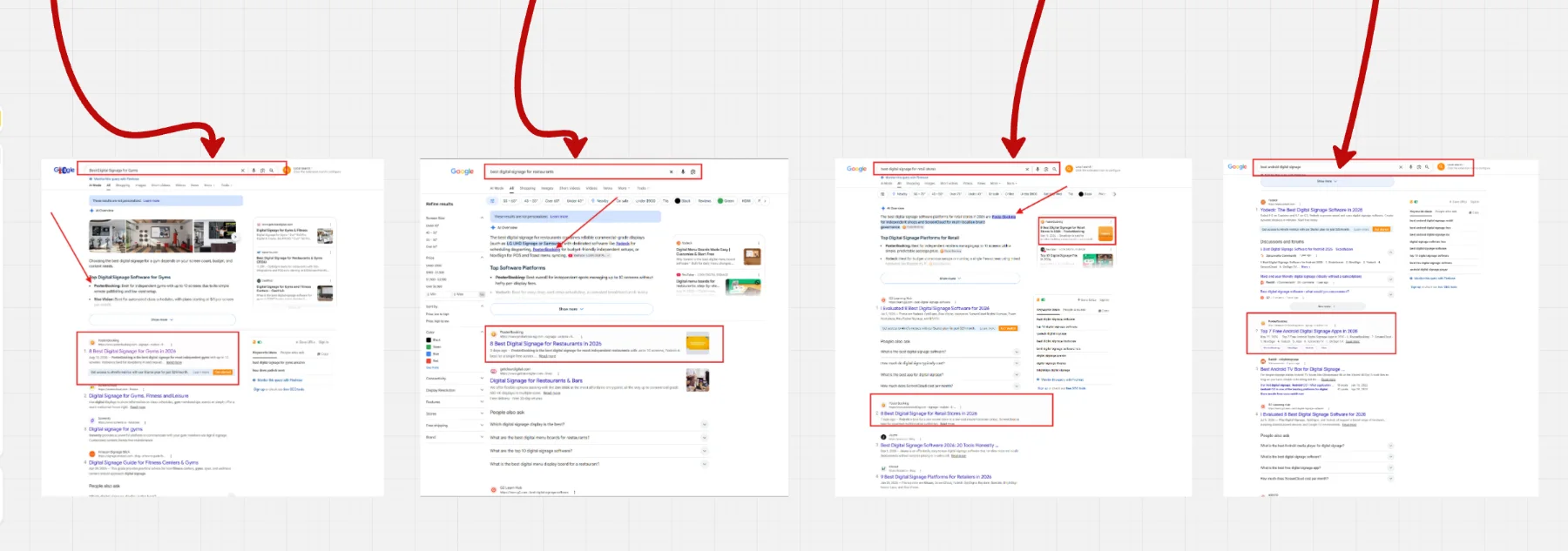
Someone searching “what is digital signage?” could be a student, marketer, journalist, business owner, competitor, or somebody who became curious five minutes ago.
Someone searching:
“Best digital signage software for restaurants”
is giving you much stronger information about their intent.
They are likely evaluating solutions. That means the value of a BOFU keyword comes from three things:
Higher commercial intent: The searcher is further along the buying journey.
Clearer product relevance: You can connect your software directly to a use case.
Shorter path to conversion: The user may already be ready to sign up, book a demo, or compare pricing.
This does not mean ignoring TOFU or MOFU content. A good SEO strategy still needs content across the entire funnel. But when the objective is generating pipeline rather than collecting traffic screenshots for monthly reports, BOFU pages deserve a lot of attention.
My BOFU Content Process
The process I use can broadly be broken into six stages:
Find commercially valuable search queries.
Research real buyer discussions.
Gather current information about the market.
Reverse engineer the existing SERPs.
Build a differentiated but defensible comparison.
Refine the page for humans, Google, and AI search.
Each stage adds another layer to the final article.
Step 1: Start With Commercial Search Intent
Before creating anything, I first ask whether the query represents someone who could realistically become a customer.
For SaaS companies, some of the strongest patterns tend to include:
“Best” queries
Examples:
Best accounting software for agencies
Best CRM for real estate teams
Best employee engagement software
Best digital signage software for restaurants
Alternative queries
Examples:
HubSpot alternatives
Salesforce alternatives for small businesses
Slack alternatives for remote teams
Comparison queries
Examples:
HubSpot vs Salesforce
Monday vs ClickUp
Product A vs Product B
Segment-specific searches
These are particularly interesting because they allow you to create a stronger relationship between the software and a particular ICP.
Instead of targeting:
Best digital signage software
you might target:
Best digital signage software for independent gyms
The second query is more specific, but that specificity can actually make the page more commercially useful.
Step 2: Research What Real Users Are Saying
One of the biggest mistakes people make when creating BOFU content with AI is starting with a blank ChatGPT conversation and typing:
“Write me the best software article.”
That gives you information similar to what thousands of other people using the same models can generate.
I want another layer of information.
That is why I use sources such as Reddit and other real user discussions during the research process.
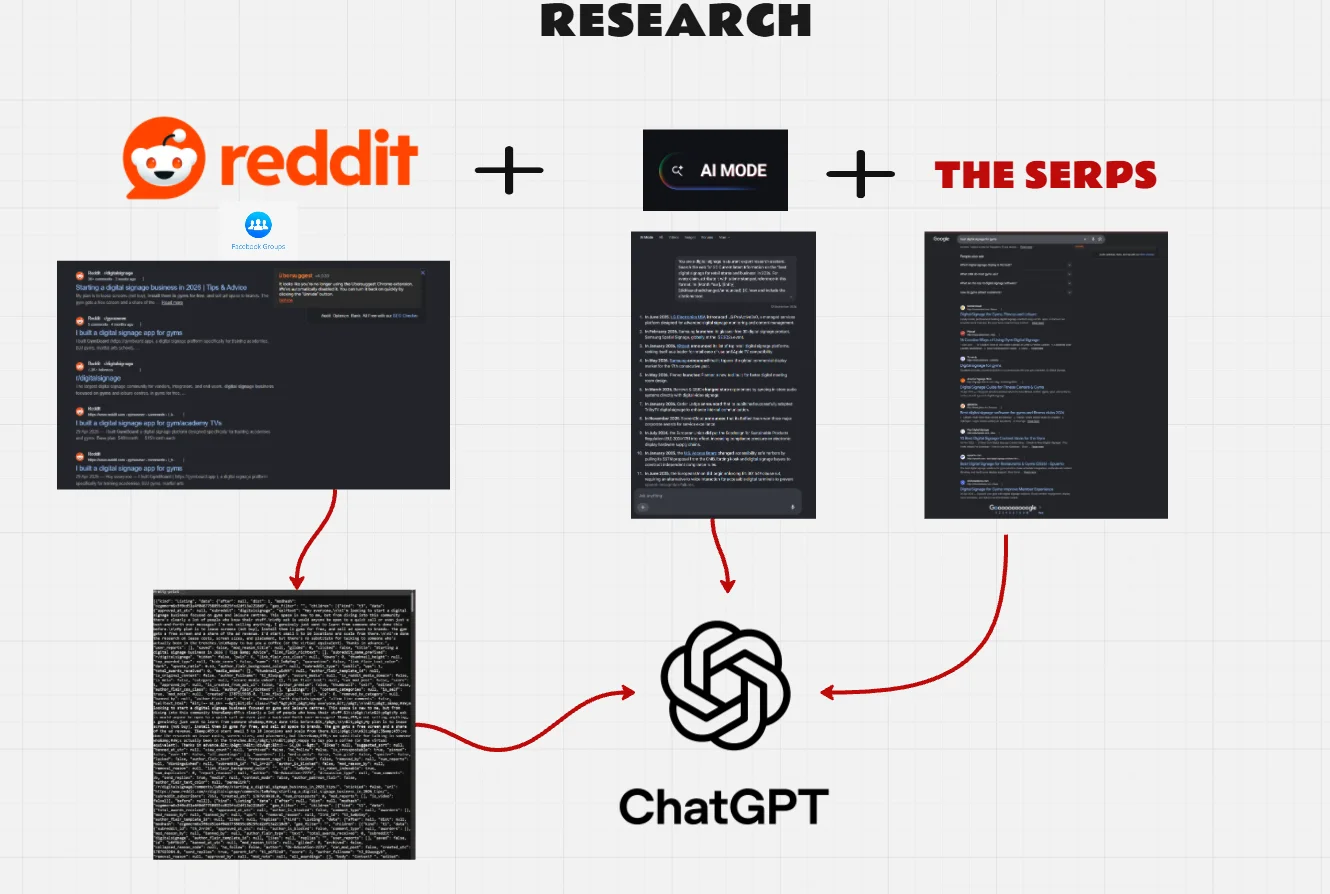
For some pages, I may analyse dozens of conversations around the topic. I am looking for recurring patterns rather than treating one anonymous Reddit comment as divine revelation.
I want to know:
What problems keep appearing?
What features do users care about most?
What do customers complain about?
Which products are repeatedly recommended?
Why are those products recommended?
What use cases are poorly served?
What terminology do buyers naturally use?
What factors appear to influence purchasing decisions?
This helps me understand the market from the user's perspective instead of relying completely on company marketing pages.
For example, several software websites might advertise “centralised content management.” But actual users may repeatedly describe the real problem as:
Managing ten screens individually is a nightmare.
Those two statements describe the same general feature, but the second gives you much more insight into how people experience the problem.
That information can shape how the article is written.
Step 3: Add Current Information
The next thing I want is recency.
This matters particularly for SaaS because software products change constantly. Features are introduced, removed, renamed, bundled into different plans, or locked behind enterprise pricing.
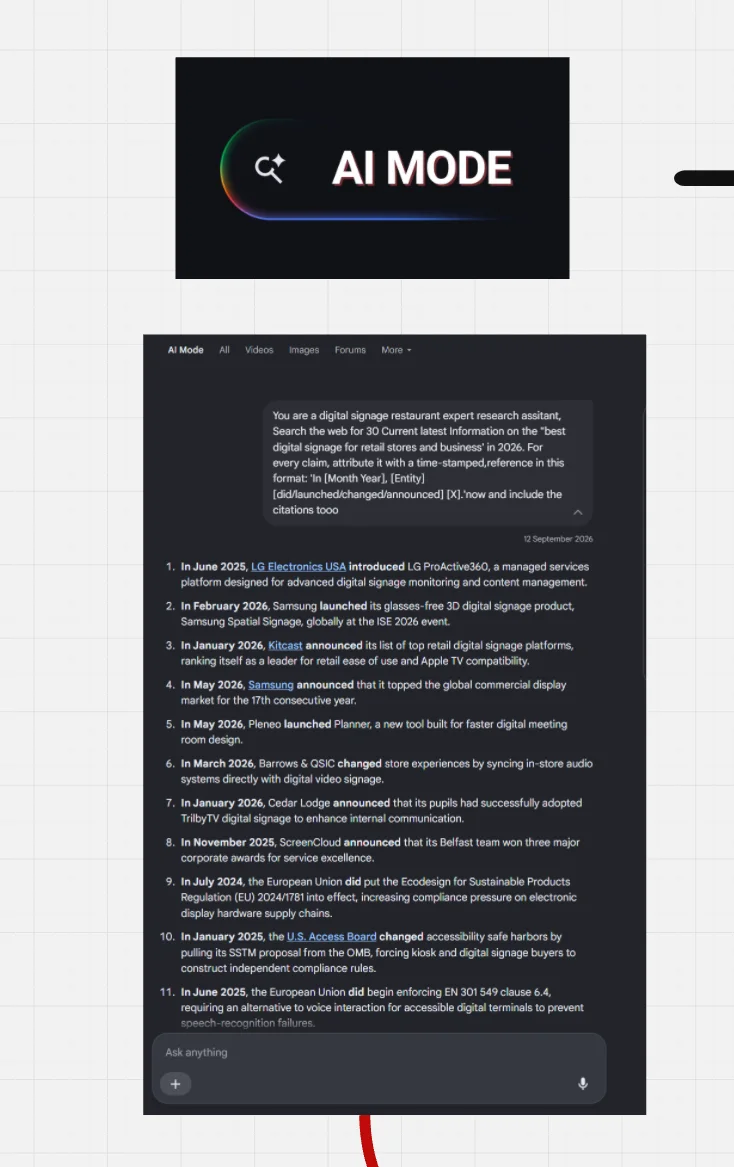
When creating a current comparison article, I look for information such as:
Current product features
Current pricing
Recently released functionality
Integrations
Product documentation
Recent customer reviews
Current positioning
Recent industry developments
If I am creating a page around a 2026 query, I want the information inside the article to genuinely reflect the current market.
Adding “2026” to an H1 while citing information from 2022 is not recency. It is SEO cosplay.
The more commercially important the query is, the more important accurate current information becomes because someone could actually make a purchasing decision based on what the article says.
Step 4: Reverse Engineer the Existing SERP
Next, I analyse the pages already ranking for the target query.
Normally, I will look through roughly 10–12 competing pages and search for patterns.
I am not trying to copy one competitor. I am trying to understand the broader consensus around the query.
Some of the things I look for include:
| What I analyse | What I'm trying to understand |
|---|---|
| Products repeatedly mentioned | Which solutions Google associates with the category |
| Heading structures | What questions users appear to expect answered |
| Comparison criteria | Which attributes matter within the category |
| Content depth | How extensively the topic needs to be covered |
| Product positioning | How competitors distinguish each option |
| Missing information | Where we can add something genuinely useful |
The existing SERP is effectively giving you clues about how Google currently interprets the search intent.
That does not mean copying everything that currently ranks.
It means understanding the consensus before deciding where to differentiate.
My basic thinking is:
Consensus first. Differentiation second.
If nine ranking pages cover a particular subject because it is essential to the buying decision, ignoring it just to be “unique” usually makes the article worse.
Instead, cover what needs to be covered and then look for angles the existing pages have missed.
Step 5: Give Every Product a Defensible Attribute
This is one of the biggest differences between generic listicles and the pages I try to create.
Most comparison articles use attributes like:
Best overall
Best value
Best for small businesses
Best features
These labels are usually too vague.
I want the positioning to be more specific.
For example:
Best for independent gyms managing up to 10 screens
is much stronger than:
Best overall digital signage platform
The first recommendation tells the reader:
Who the product is for
What situation it fits
Why it might be relevant to them
That specific relationship can also matter for AI search.
On one of the pages we created, a product was positioned strongly around independent gyms. When we later tested AI-driven search results, the product was repeatedly associated with independent gyms and similar use cases.
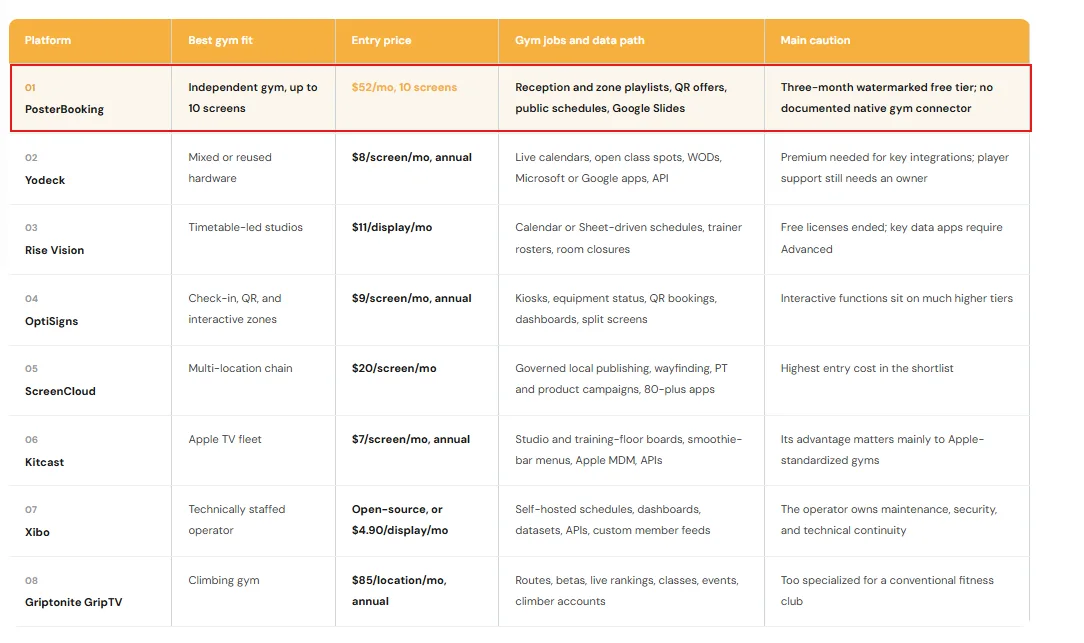
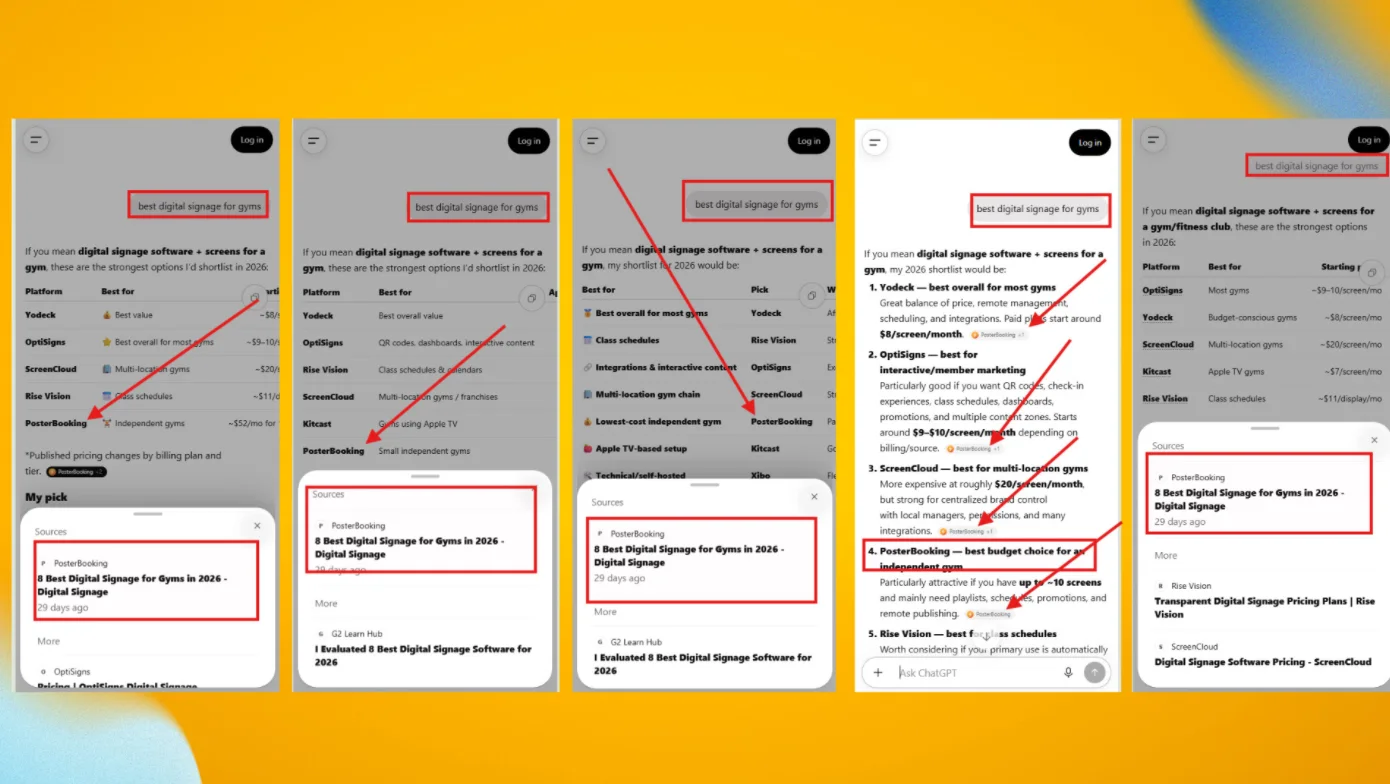
The wording was not identical every time because AI results are probabilistic. But the underlying association kept appearing.
That is exactly what I want.
Instead of merely mentioning your SaaS product inside an article, you want to build a clear connection:
Product → Attribute → Customer segment
For example:
Product A → simple multi-screen management → independent gyms
That is far stronger than:
Product A → good software
Step 6: Answer the Main Question Immediately
Commercial content should not spend 700 words warming the reader up.
If somebody searched: Best digital signage software for restaurants, show them the best digital signage software for restaurants.
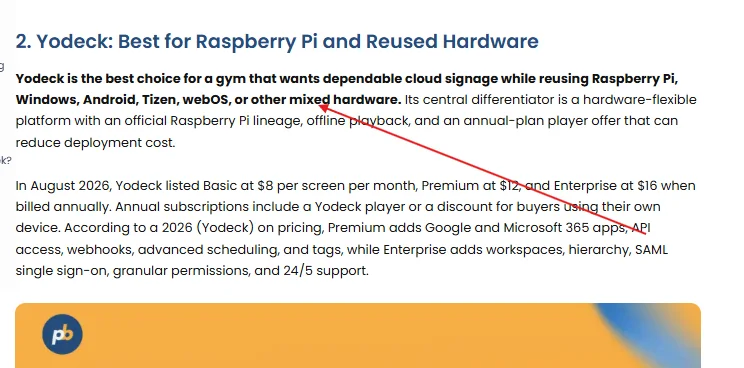
I generally want the beginning of the article to include some combination of:
A direct answer
A shortlist
A comparison table
The specific “best for” attribute attached to each product
For example:
| Platform | Best for |
|---|---|
| Product A | Independent restaurants |
| Product B | Multi-location restaurant chains |
| Product C | Restaurants using existing Android hardware |
| Product D | Teams needing advanced menu-board management |
The reader can immediately understand the landscape.
Then the rest of the article explains why those recommendations were made.
This is considerably better than forcing someone through five paragraphs explaining that “technology has transformed the restaurant industry.”
They know. Their toaster probably has Wi-Fi.
Structure Important Sections Around Direct AnswersOne of the main principles behind my Semantic Article Refiner is simple: important questions should receive clear answers.
If the heading asks:
What is X?
The answer should begin by defining X.
If the heading asks:
Why does X happen?
The opening sentence should explain why.
If the heading asks:
How do you do X?
Start explaining the process.
This seems obvious, but a surprising amount of content hides the answer underneath context, filler, and unnecessary transitions.
A cleaner structure helps readers quickly understand the page, but it also creates passages that are easier for search systems to interpret and extract.
For example, instead of writing:
Many businesses today have started looking at different ways that digital signage can potentially help their operations, particularly as technology continues evolving...
you might write:
Digital signage software lets businesses centrally manage and publish content across one or more digital screens.
Then expand from there.
The first version is language.
The second version is information.
Use Specificity Wherever Possible
Generic claims weaken commercial content.
Compare:
Product X works well for gyms.
with:
Product X is best suited to independent gyms running up to 10 screens that want centralised content management without enterprise-level complexity.
The second statement creates a much clearer picture.
Specificity can come from:
Customer type
Number of users
Number of locations
Number of screens
Pricing level
Particular functionality
Hardware requirements
Integrations
Business model
Specific operational problem
You do not need to force numbers into every paragraph. The point is to reduce ambiguous statements wherever your research allows you to be more precise.
Use Evidence Throughout the Article
A BOFU comparison should not read like one long personal opinion.
For the pages I create, supporting information can come from multiple sources:
Official product documentation
Pricing pages
G2
Capterra
Reddit
Current customer discussions
Industry reports
First-party research
Product screenshots
Hands-on observations
Different sources answer different questions. The company's documentation might tell you what a feature does.G2 might show what customers consistently complain about.
Reddit might reveal unconventional use cases.
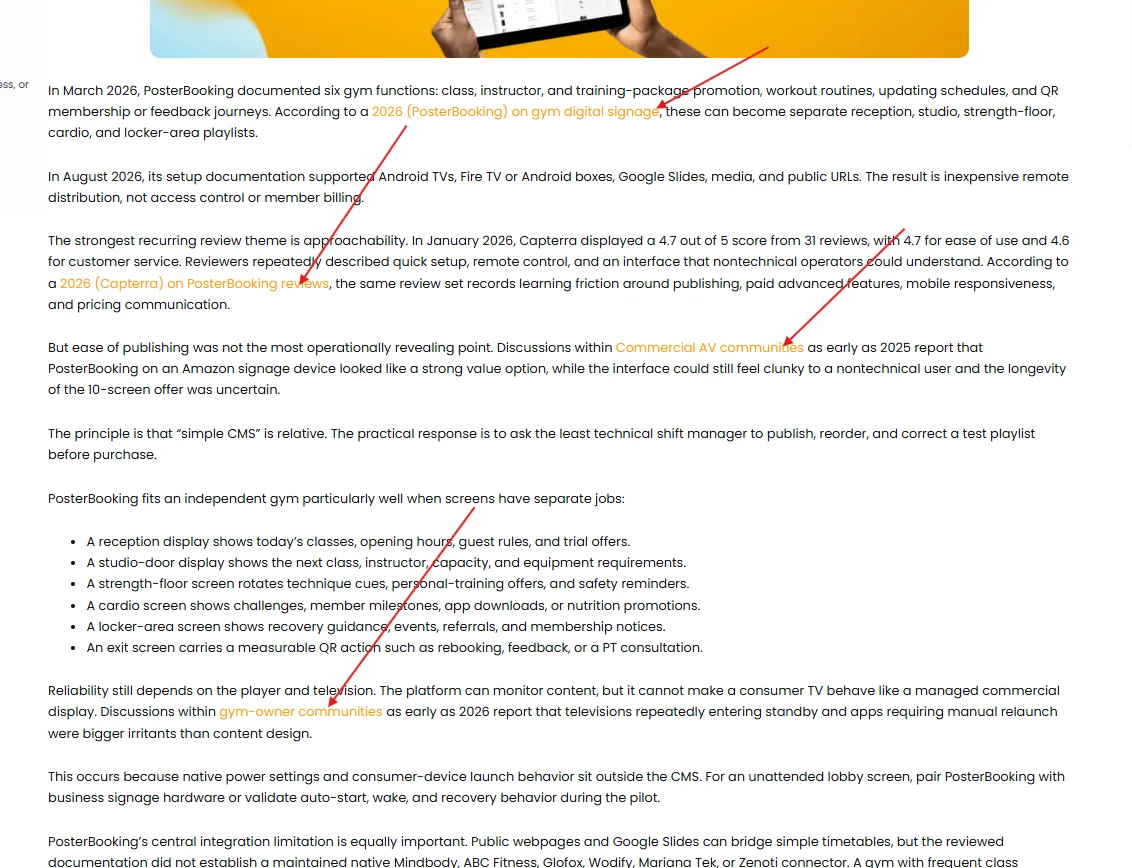
Together, those inputs create a stronger recommendation.
Separate Your Opinion From User Feedback
One structure I like using instead of the usual “Pros and Cons” section is:
What I like
This contains my assessment of the product.
What users like
This contains recurring positive themes from customer reviews or discussions.
What I dislike
This contains limitations I identified during the research.
What users dislike
This contains recurring customer complaints.
That small structural difference makes the article more useful because it does not pretend that the writer's opinion and customer experience are exactly the same thing.
It can also help you surface interesting contradictions.
Maybe I like the product's advanced customisation options, but users repeatedly complain that those same options make the software difficult to configure.
That is useful information for a buyer.
Add Something Competitors Are MissingOnce the article covers the established consensus, I start looking for opportunities to introduce information that is not already everywhere.
This could include:
A customer segment competitors ignore
A product nobody has included
A specific integration
Hardware compatibility
A practical limitation
An unusual use case
First-party data
A recurring issue discovered in Reddit discussions
Screenshots demonstrating how the product works
For one article, we introduced a recommendation relevant specifically to climbing gyms. That angle was not a major part of the existing ranking pages, but it was relevant and gave the page additional depth.
This is how I think about the balance:
Follow the consensus enough to satisfy the query. Add enough original information to justify the existence of your page.
You do not need to completely reinvent the topic.
You need to contribute something.
Add Unique Images and First-Party ElementsIf AI has helped create the written content, unique first-party elements become even more important.
The final article should not feel like text that could have been generated by anyone with access to the same model.
Depending on the subject, I might add:
Original product screenshots
Annotated screenshots
Custom graphics
Comparison visuals
Interface examples
Photos
Original charts
Examples from our testing
The important thing is that the visual actually adds value.
I would rather have three useful screenshots than 15 decorative stock images of people pointing at laptops while apparently experiencing the happiest quarterly planning session in corporate history.
The visual should explain, demonstrate, compare, or prove something.
Add Supplementary Content Around the Main QueryThe primary list answers the main search query, but readers usually have additional questions before making a purchase.
For a software comparison, supplementary sections might cover:
Pricing
Integrations
Hardware requirements
Installation
Support
Compatibility
Security
Ease of use
Switching from another platform
Common questions
These sections are also excellent places to add relevant internal links.
If you already have a detailed article about integrations, for example, there is no reason to repeat everything on the BOFU page. Give the reader the important information and link them to the deeper resource.
That turns the BOFU page into a commercial hub connected to the rest of the site's content.
How Long Should a BOFU Article Be?There is no perfect word count.
Some of the pages I have created using this process are around 7,000–8,000 words, and they rank well. But that does not mean 8,000 words is some secret ranking threshold.
The article should be long enough to satisfy the query properly.
A useful test is whether you still have meaningful questions left unanswered.
A long comparison may need space for:
The initial shortlist.
A comparison table.
Individual product reviews.
Use-case recommendations.
User feedback.
Pricing.
Buying criteria.
Implementation questions.
FAQs.
Naturally, that can become a substantial article.
But if the topic can be answered completely in 2,500 words, turning it into 8,000 words is not “topical authority.”
It is padding.
Why I Don't Publish Raw AI ContentAI is heavily involved in my process, but I do not treat the model as the decision-maker.
There is a massive difference between using AI as a research and refinement system and telling ChatGPT to “write a 5,000-word SEO article” and publishing whatever comes out.
I use AI to help with things such as:
Organising research
Identifying patterns
Structuring sections
Comparing evidence
Drafting
Refining passages
Improving clarity
Removing unnecessary language
Checking whether questions were answered directly
But the final judgment remains human.
I still change recommendations, question conclusions, rewrite sections, remove claims, adjust product positioning, and add information the AI missed.
There is often a lot of back-and-forth.
That matters because generic AI content has become incredibly easy to create. If everyone can produce it, simply producing it gives you no meaningful advantage.
The advantage has to come from the research, inputs, judgment, experience, evidence, and refinement surrounding it.
The Full BOFU SEO ChecklistIf you want to apply the process yourself, this is the condensed version.
Research
Choose a query with strong commercial intent.
Analyse 10–12 relevant ranking pages.
Review Reddit and other real user discussions.
Research current product information.
Identify recurring buying criteria.
Find gaps in the current SERP.
Positioning
Give every product a clear “best for” attribute.
Make your own product's attribute specific and defensible.
Avoid vague positioning such as “best overall” unless you can genuinely justify it.
Connect products to clear customer types and use cases.
Writing
Answer the primary question immediately.
Use comparison tables near the top where useful.
Write direct answers beneath question-based headings.
Add supporting evidence throughout.
Separate your own assessment from user feedback.
Keep individual sections focused on one main idea.
Differentiation
Add unique screenshots.
Add first-party observations.
Include useful angles competitors missed.
Add recent information.
Introduce real customer language and problems where appropriate.
Refinement
Remove filler.
Challenge AI-generated conclusions.
Check factual claims.
Make vague recommendations more specific.
Make sure every section actually helps someone make a decision.
The purpose of this strategy is not simply to create long articles or rank for another batch of keywords.
The real objective is to become visible when somebody is deciding what to buy.
That is what makes BOFU SEO so valuable.
When someone searches for the best software for their particular situation, you want your product to appear within that decision-making process. You want the article to clearly explain where the product fits, why it fits, and which type of customer should consider it.
If you can do that consistently, these pages can create visibility across traditional Google results, AI Overviews, and LLM-driven search experiences while also giving buyers the information they need to move toward a decision.
That is when SEO stops being purely a traffic channel.
It becomes part of your acquisition system.